

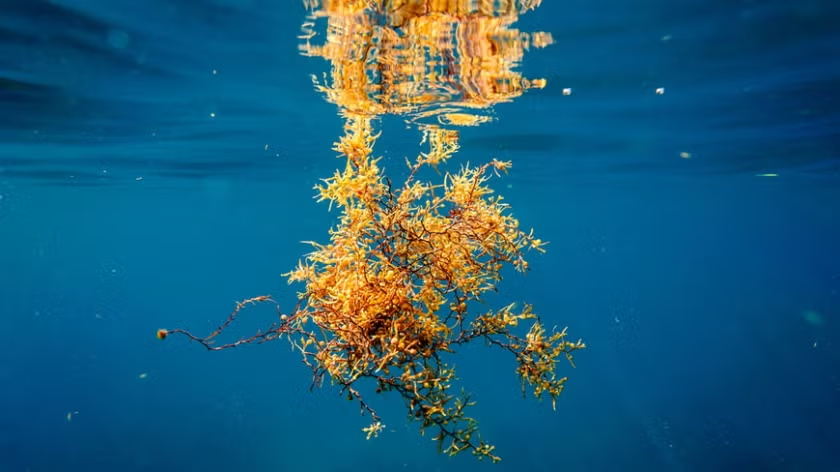
Saint Lucia’s battle against the persistent sargassum seaweed menace has gained fresh momentum with the arrival of new heavy-duty equipment aimed at protecting coastal communities and preserving marine ecosystems.
The Ministry of Agriculture, Fisheries, Food Security and Rural Development unveiled a fleet of tractors and specialised beach-cleaning attachments this week, part of a larger regional initiative supported by the United Nations Development Programme (UNDP) and funded by the Government of Japan.
Officials say the new equipment will dramatically improve the island’s capacity to clear sargassum quickly and sustainably, particularly in areas where fishing and tourism livelihoods are most affected.
Deputy Chief Fisheries Officer Thomas Nelson praised the partnership, emphasising that Saint Lucia’s response to sargassum requires both coordination and continuity.
“We are committed to maintaining our beaches and safeguarding the economic well-being of coastal communities,” Nelson stated. “This support from the UNDP and Japan is a crucial step toward building regional resilience against the environmental and economic challenges posed by sargassum.”
He reassured Ambassador Su that she has strong allies in Saint Lucia who deeply appreciate Taiwan’s steadfast support. “We wish you great success, meaningful partnerships, and a fulfilling tenure in Saint Lucia,” said the United Workers Party (UWP) leader and former Prime Minister. Chastanet expressed his optimism that Ambassador Su’s leadership will further strengthen diplomatic relations between the two nations, leading to more collaborations and beneficial projects.
The initiative forms part of the US$20 million Regional Sargassum Management Project, which seeks to strengthen Caribbean nations’ capacity to monitor, manage, and mitigate the impacts of the recurring seaweed influx.
Additional resources—including deflection booms, a dump truck, and a cleanup vessel—are expected to arrive in the coming months, expanding Saint Lucia’s ability to tackle the problem both onshore and offshore.
With these reinforcements, authorities hope to transition from reactive cleanups to a proactive, long-term management system that can keep Saint Lucia’s coastlines clean, resilient, and open for business.